“If a thousand years were to pass in a second what would be left of us?”
The Dig – Movie
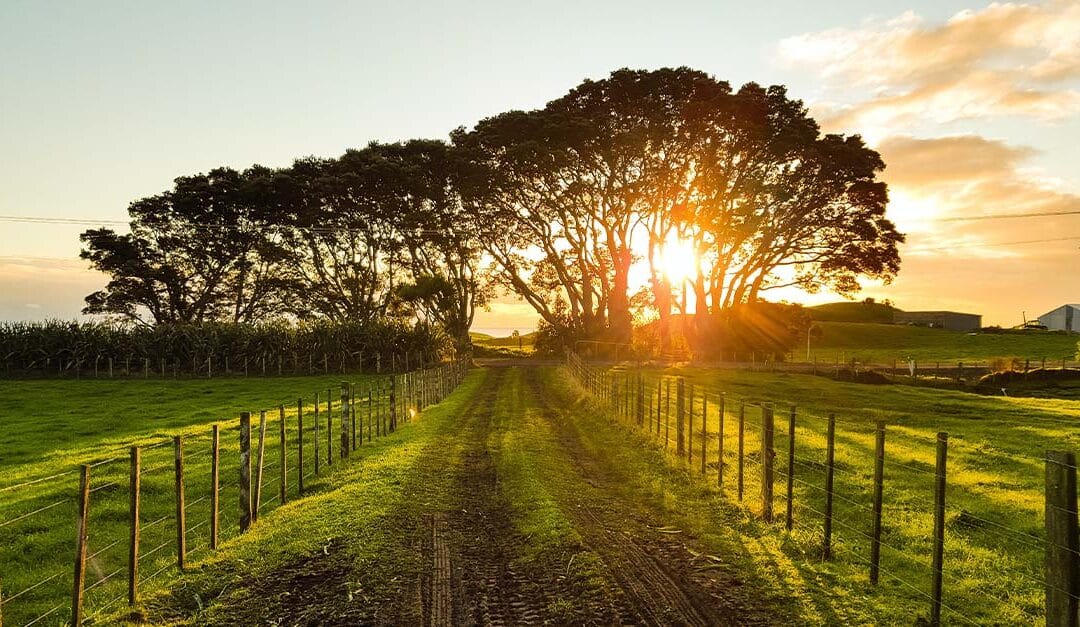
I read somewhere that the best time to plant a tree is twenty years ago. The next best time is today. Autumn is coming and with the rains will come the opportunity to begin planting out the stream on my property that is so in need of a kind and considerate lover.
It is only five weeks but my efforts to bring my stream back to life have been an inspiration. Not in a, “Gee Dave, you are a great green guy,” kind of way, but with the people I have already met and talked to along the way.
Jim
Jim used to live on my land along with all the land around it. He wasn’t an easy conversationalist, preferring his own company unless it was down at the golf club over a few beers. He was, though, inspiring when we moved out from town eleven years ago.
Inspiring because he always helped but never interfered. Inspiring because he seemed capable of turning his hand to any task.
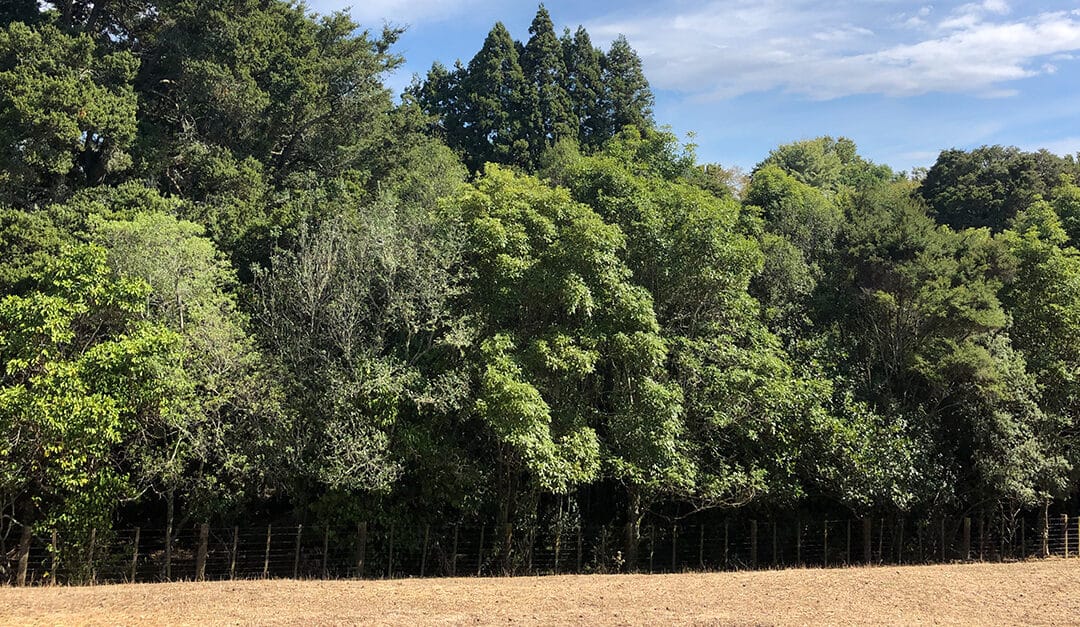
Most of all he was inspiring because he planted, one by one, the trees, bushes and shrubs that became the beautiful wetland and arboretum (a botanical garden dedicated to trees) that borders my place. My stream, when it’s not bone dry, flows into the wetland on Jim’s arboretum. From there it flows down and on to the Manukau Harbour.
Eels, conversely make their way back up from some mysterious place in the Pacific, into the Manukau and eventually find a safe place in amongst the wetland reeds. If I succeed in making it a safer place, they will continue their journey up my stream as they have done in the past.
Each morning I have my tea and toast on the front deck and look across and up at the established kahikateas and ancient totara that inspired him to protect by surrounding them with plantings from a nursery that was closing down and saplings from surrounding farms.
All I see is how many different colours of green there are. All I hear are the hundreds of birds he protected by sustained pest control programmes.
One time the neighbour clear felled a patch of trees on the land nearby. Possums, destroyers of forests and bush and predators to nesting birdlife, fled across to my place and into Jim’s arboretum. We silently went into competition, killing sixty of them in a two week period. Maybe the neighbour did us a favour – he never controlled pests on his land. Possums have never been a major problem since.
“We sure sorted them,” Jim said over a beer one evening.
‘WE’. Jim never said ‘we’. He was far too stoic to say that.
Jim left without really saying goodbye last year. He never liked a fuss. He sold the property and arboretum to Gary. Rumour has it that developers were eyeing up the land and that Jim rejected their offers despite pressure from the agent.
Gary
Gary had been looking for a spot to build a place for a while. He went over Karaka way and all he saw was bare blocks. “By the time I planted it out and the trees grew I’d be dead.”
He had a look at the arboretum and the land behind it that he could build on . He fell in love and made an offer which Jim rejected as ‘too low.’
“How much?”
“Ask the agent.”
“Too much,” said the agent who didn’t know the value of trees except as firewood.
“How much?” asked Gary.
The agent told him and Gary said yes. It was cheaper than the bare blocks in Karaka and he liked the view.
I spoke to Gary about the stream and my plans for it the other day. He lit up and offered me cuttings from the giant flaxes in the wetland.
“I’ll give you a hand planting them if you like. We can have a beer on the porch after and share the view.” ‘WE’. He said we. He never says ‘we’ except to his mates.
Ken
Ken is a horticulturist, gardener and all round ball of muscle and energy that makes this skinny old guy feel more than a little inadequate when he arrives with his chainsaw, weed wacker and hedge trimmer and smashes through work in a day that would take me a week if my back held out.
We have known each other for a while now and when I showed him my stream project I wasn’t sure if he would be as overawed by the enormity of the task as I am prone to be. He was engaged – no excited about the plan. I felt energised just being around him.
“We could clear five metres back from the stream to make it a bit easier to sort out the planting and fencing plan,” he offered after a bit of thought.
WE. He never says ‘we’ – he is too polite to say that.
A day later the stream bank was cleared, the old man’s beard cut back with the contempt this native forest smothering vine deserves and all the existing native shrubs were upright and free of weeds. Ken was on fire and so was I.
Samuel
Samuel minds my sheep for me. These days there are only six older ewes, all a bit fat from over feeding, beautiful and a bit posh. They are the product of a breeding programme that ended when I tired of lambs bleating all day and night because they were separated from their mum by a seven-strand fence and a wide-open gate.
Samuel treats them with a gentle hand. He even whispers to them– mimicking their low bleating and soothing them when he and his dogs work with them. I’ve never seen them cut, not even a nick, when he shears them. That is more than I can say for the ‘expert’ shearer I hired a decade ago whose heavy-handed brutality saw me shoo him off my property.
“Bloody townie,” he called back, not amused that I had held him responsible for the blood stains on my shell shocked animals. He didn’t hear my reply as he left – neither will you see it in print. I am far too polite for that.
Samuel is also a fencer in the off season. We walked the stream and I shared my hippy vision of plants, fish, frogs and eels. “We can fence off this spring,” he said. “The frogs and fish can breed in there away from the kingfishers. Set a couple of rat and stoat traps and it’ll be ideal.” ‘WE’. He never says ‘we’ – he’s far too shy and solitary for that
Please feel free to contact me, Planet Spratt, at [email protected] if you have any feedback, ideas or suggestions
Or you can make business and media enquiries to Total Utilities here.
The COP26 summit brought governments together in Sept 2021 to discuss accelerated actions towards the goals of the Paris Agreement (2015), which is an international treaty signed by 196 participating member states at COP21 in Paris, 2015. It aims to keep the global average temperature at ‘well below’ 2 degrees above pre-industrial levels, ideally 1.5 degrees, to strengthen the ability to adapt to climate change, and build resilience; align all finance flows with, ‘a pathway towards low greenhouse gas emissions, and climate-resilient development’.
New Zealand has signed up to United Nations Framework Convention on Climate Change (UNFCCC) and as a signatory to the agreement we have to commit Nationally Determined Contributions (NDC) to climate action. Our first NDC saw us committed to reducing greenhouse gas emissions to 30% below 2005 levels by 2030. However this was refreshed at the summit to increase our commitment to reduce emissions by 50% at 2030, compared to 2005 levels.
One of COP26 objectives is to phase out coal. The current Government has already committed to removing coal as a fuel source from our economy. A ban on new coal boilers used in manufacturing and production will come into effect by 31st December 2021 and phasing out existing coal boilers by 2027.
A further option proposed is to prohibit other new fossil fuel boilers (gas, LPG) where suitable alternative technology exists and is economically viable.
The key instrument that will be used to foster a move to a low carbon economy will be the emissions trading scheme (ETS), and a series of changing emissions budgets. An emissions budget seeks to limit greenhouse gases that can be emitted over a period of time.These changing budgets are spread over three key periods: 2022-2025, 2026-2030 and 2031-2035. This will reduce the quantity of Government-issued New Zealand Carbon Units. As these quantities reduce, the cost of carbon will be increased.
When the emissions trading scheme (ETS) was first introduced, the price of carbon was fixed at $25 per tonne; however, there was a 2 for one surrender ratio meaning that for every tonne emitted, only half a tonne was surrendered, making the effective price $12.50/tonne.
Over time the market caps have been lifted, and emitters have moved to a one for one surrender ratio. In the last two years, the Government introduced a floor and ceiling in the market: $20 floor and $50 ceiling. This year, prices were raised to make the minimum price $30/tonne and ceiling price $70/tonne. The ceiling will be increased by 10% per year plus inflation.
The below table covers current carbon spot pricing and New Zealand Unit (NZU) future pricing with a view on where carbon prices could go out to in 2030. This is the cost that relates to the gas field producing natural gas or the electricity generator producing electricity. For gas customers who are Time of Use (TOU) metered, this cost is passed through as a line item on each invoice. For small commercial gas consumers and all electricity customers, the cost of the ETS is built into the energy tariff. You can see the change from 12 months ago where the carbon price has nearly doubled. In November 2018, it was priced at around $25/tonne.
Energy companies within NZ will have to look at their generational assets and search for alternative solutions in a fast and least disruptive way to avoid shortages and payment of increased ETS costs.
Transitioning the economy’s energy needs to electricity requires much more than just new generation, the national grid operator and local electricity network distributors will need to invest billions to get things moving.
Whatever is done, NZ needs to sort out its energy policy and fast to ensure the security of supply, the ability for manufacturing to thrive in NZ (by avoiding having to outsource our emissions), and keep prices as low as possible.
Total Utilities is proud to join a growing community of over 40 suppliers and service providers participating in the Carbon Neutral Government Programme. We join the likes of Deloitte, WSP and many other organisations who profoundly care about protecting our beautiful country and people from the impact of climate change.
The purpose of the CNGP is to accelerate the reduction of emissions within the public sector and targets three areas in particular: heating, transport, and buildings.
We are Toitū carbonzero, too
This exciting news follows our February announcement, where we shared our Toitū carbonzero certification. Our commitment to taking positive action on climate change is reinforced by being on the CNGP list.
Supporting corporates and public sector clients for over 20 years
Our organisation began in 1999. Now over 3,000 corporate and public sector clients — including many schools, colleges, and tertiary institutes — rely on us for their electricity, natural gas and waste procurement, cost and consumption analysis.
More recently, we’ve been helping organisations accurately measure, verify and report on their carbon and greenhouse gas emissions. We do this with a three-prong approach: understand and act, improve and reduce, and target and report.
Paving the way to decarbonised organisations up and down the country
Through this three-step process, we help organisations understand their current footprint, create a carbon management plan for short and long-term savings, and design and maintain a greenhouse gas inventory. Together these steps help organisations decarbonise their activities and reach CarbonZero certified status.
Capabilities and experience in all five categories
The CNPG assessed us and confirmed we have capabilities and experience in all five of their key areas. This means we offer:
services to measure and report greenhouse gas (GHG) emissions
independent verification services
independent verification services which meet third-party accreditation standards
services to support emission reduction plans and strategies
software solutions, tools, and other support to manage emission reduction plans and strategies.
World-leading Technology and best practice
Total Utilities uses world-class leading technology and international best practice to help organisations gain insights from their emissions inventory. They are committed to enabling organisations to reduce their carbon footprint and achieve short and long-term savings, often without additional capital spending.
Joining like-minded organisations
The programme is a great step for us and helps put us in contact with government entities seeking to accelerate their emissions reductions. Being identified as a supplier in all five categories means we can help entities from start to finish – from advising on measurement and reporting, reviewing their internal plans, building a reduction plan, to monitoring the outcome with our software and reporting tools.
We look forward to partnering with like-minded entities who are paving the way to a low emissions economy, and it’s great to see the government taking an active lead in setting this example.
As an organisation, we walk the sustainability talk by managing and reducing our greenhouse gas emissions wherever we can and neutralising our unavoidable emissions.