📊 Is Your Organisation Receiving Genuine Value for Money?
Most organisations regularly review major cost categories such as labour, energy and insurance.
Trade waste and recycling is different.
Contracts often remain unchanged for years, making it difficult to know whether pricing remains competitive, services still match operational requirements, or costs are quietly increasing over time.
At Total Utilities, we recently helped clients across education, retail, horticulture and agriculture achieve:
✅ Up to 60% reductions in waste procurement costs
✅ More than $600,000 in annual cost reductions
✅ $10,767 recovered from historical overcharges and invoicing errors
✅ Improved supplier governance and operational efficiencies
However, the real value wasn’t simply the savings achieved.
It was the visibility gained.
In several cases, invoice analysis and site validation identified:
🔍 Services being billed incorrectly
🔍 Costs that had drifted from market rates
🔍 Waste arrangements that no longer reflected operational requirements
🔍 Limited cost transparency, making it difficult to determine whether genuine value for money was being achieved
The Question Is Not “How Much Could We Save?”
The Question Is: What is the cost of doing nothing?
Without regular benchmarking and review, organisations can experience:
📈 Annual supplier increases
📦 Unnecessary collections and services
📋 Incorrect billing
🏢 Waste arrangements no longer aligned to operational requirements
💸 Hidden cost increases that quietly erode margins over time
🎯 Complimentary Waste Cost & Governance Review
If your waste and recycling arrangements have not been independently reviewed in the last 12-24 months, we can help you:
✅ Validate supplier pricing
✅ Review collection frequencies and service requirements
✅ Identify billing anomalies and overcharges
✅ Quantify opportunities for improvement
✅ Understand the financial risk of maintaining the status quo
Total Utilities Helping organisations reduce costs, improve transparency and make better-informed commercial decisions. 📈
Strengthening governance, cost transparency and financial performance
The executive question is not only what could be gained by acting, but what is the cost of doing nothing?
The Opportunity
Trade waste and recycling is often one of the least scrutinised categories of operating expenditure. Waste contracts can remain unchanged for years despite changing market conditions, waste volumes and operational requirements.
Total Utilities does not replace internal expertise. We provide independent market intelligence, specialist procurement capability and ongoing performance monitoring that helps finance, procurement and operations teams make better-informed commercial decisions.
By combining benchmarking, procurement expertise and waste data analysis, we help improve cost transparency, strengthen governance, reduce commercial risk and protect operating margins.
Results Across Multiple Sectors During 2026
Examples achieved across education, retail, horticulture and agriculture:
Client Type
Reduction in Waste Procurement Costs
Primary School
60%
High School
48%
Multi-Site Retail Chain
46%
Agricultural Business
44%
Horticulture Business
33%
Intermediate School
31%
Combined annual cost reductions exceeding $600,000 while maintaining or improving operational service levels.
Market Intelligence Creates Better Outcomes
As waste procurement specialists, we understand the rates organisations should typically expect to pay for specific bin sizes, collection frequencies and service requirements. Our buying power, market intelligence and supplier relationships help clients secure competitive commercial terms.
In many cases, better outcomes are achieved without changing suppliers. Our focus is on validating pricing, improving contract structures and aligning services with operational needs.
Education Sector Example
A school engaged Total Utilities to validate whether its existing waste contract remained market competitive. Our independent benchmarking confirmed significant pricing misalignment, enabling the school to reduce waste costs by 60% while retaining the same supplier and service model. More importantly, the school gained confidence that it was receiving fair market pricing and meeting its governance obligations around supplier expenditure.
FMCG Example
A supermarket operator engaged Total Utilities to improve visibility and control over waste expenditure. Our review identified a 32% cost-reduction opportunity and provided greater transparency around rates, service charges, and contractual terms. The result was not only lower costs, but also improved confidence that waste procurement decisions were supported by robust market intelligence and supplier accountability.
Horticulture Sector Example
A horticulture client achieved a 23% cost reduction following an initial review in 2023, despite constraints created by existing supplier contracts.
A further review in 2026 delivered an additional 33% reduction in annual waste costs and consolidated suppliers from eight to three. This improved contract management, reporting, invoice administration and coordination between operational and finance teams.
Invoice Validation: Recovering Incorrect Charges
Market intelligence is valuable not only when negotiating future pricing. It also helps identify charges that do not align with the services and assets actually provided.
For one education client, a site visit and invoice analysis identified charges for bins that were not present on site. Total Utilities supported the recovery of a $7,605 supplier credit for incorrect billing.
For a horticulture client, our review similarly identified supplier overcharges and supported the recovery of a $3,162 credit.
Together, these reviews recovered $10,767 in historical overcharges. They demonstrate the value of combining site verification, invoice analysis and specialist market knowledge. Clients may not have the benchmarks, operational visibility or category intelligence needed to identify these issues internally.
Total Utilities brings this intelligence into the procurement and governance process, helping clients verify that invoiced services match on-site requirements and that they are receiving genuine value for money.
Initial gains can be eroded by rising waste volumes, service creep, contamination charges, excess collections and annual supplier increases.
Ongoing monitoring can identify under-utilised collections, changing waste volumes, contamination, misaligned service frequencies and pricing movements, enabling proactive action before costs escalate.
Our market leading Utility Insights platform consolidates waste and recycling data into one easy to use dashboard allowing our client to Monitor, Manage and Minimise.
The greater risk is often not service failure, but the gradual accumulation of hidden costs and operational inefficiencies.
Operating with limited cost transparency makes it harder to determine whether the organisation is receiving genuine value for money. Without clear benchmarks, site validation, service-level data and ongoing measurement, decision-makers may be unable to quantify either the opportunity for improvement or the financial risk of maintaining the status quo.
The clients featured collectively reduced annual waste procurement costs by more than $600,000 and recovered $10,767 in historical overcharges. The more important question is how much additional cost would have been incurred had those arrangements remained unchanged.
The true value of a review is not simply identifying savings. It is quantifying the financial and operational risks of inaction so executives can make evidence-based decisions.
Business Impact
The strongest outcomes are defined by an organisation’s ability to:
Improve operating margins
Strengthen supplier governance
Increase budget certainty
Reduce commercial risk
Improve visibility and cost transparency
Recover incorrect charges
Create operational efficiencies
Sustain financial benefits over time
Key Takeaway
Total Utilities has helped organisations achieve more than $600,000 in annual cost reductions while maintaining service quality, retaining incumbent suppliers where appropriate and minimising operational disruption.
Most organisations can estimate the potential benefits of a procurement review. Few can quantify the impact of leaving existing arrangements unchanged.
If your waste and recycling costs have not been independently benchmarked and validated in the last 12–24 months, Total Utilities can help quantify both the opportunity for improvement and the financial risk of inaction.
Contact Total Utilities for a complimentary Waste Cost & Governance Review and establish whether your current arrangements are delivering genuine value for money.
This article is part of a three-part series on why energy procurement is about more than getting retailer quotes. The series explains how businesses can create competitive tension, uncover hidden cost drivers and avoid contract terms that limit future flexibility.
Post 3: Before you sign: the contract terms that can limit future flexibility
Energy supply contracts can look straightforward when the focus is on price, but the terms behind the rate can materially affect future flexibility. For businesses negotiating directly, the risk is that a contract may appear competitive today but restrict operational change, solar projects, site changes or efficiency improvements later.
Price is only one part of an energy supply contract. Volume obligations, site additions and removals, termination rights, pass-through charges, metering requirements, renewable energy options and future operational changes can all create risk if they are not properly considered before signing.
Total Utilities helps customers understand the practical implications of contract terms before they commit. This is particularly important for businesses with multiple sites, changing operational footprints, planned closures, new developments, solar projects, energy efficiency programmes or uncertain future demand.
Volume obligations can penalise normal business change
Some of the most important risks in an energy supply contract sit in the commercial terms rather than the headline price. A number of retailers include minimum or maximum volume conditions, take-or-pay style obligations, or pricing review mechanisms that can create unintended consequences if a customer’s consumption changes during the contract term.
This matters because businesses rarely stand still. Energy efficiency upgrades, production changes, additional shifts, new customer contracts, site closures or demand changes can all affect electricity volumes. If the contract does not allow for these changes, customers may face penalties, pricing resets, reduced flexibility or disputes over whether the original supply terms still apply.
Solar and efficiency projects need to be protected upfront
Solar is a particularly important example. Some retailers are more amenable to incorporating onsite solar into supply arrangements, while others may seek to adjust pricing, margins or volume assumptions if solar generation materially reduces grid-supplied consumption. Without clear contract wording, customers can find that a future solar project changes the commercial basis of their electricity agreement.
Total Utilities helps customers identify these risks before they sign by reviewing retailer terms, testing flexibility through the tender process, and negotiating wording that better reflects the customer’s business plans. This may include carve-outs for solar projects, allowances for reasonable consumption changes, protections for energy efficiency initiatives, and clearer treatment of business growth or operational change.
Contract management continues after signing
The value of a well-negotiated energy contract does not stop once the agreement is signed. Customers also need to know whether the contract is performing as expected, whether spend is tracking to budget, and whether changes in usage, sites or operations are affecting the commercial outcome.
Through Total Utilities’ Utility Insights service, customers gain a unified view of utility data across electricity, natural gas, LPG, waste and recycling, consolidating supplier and site information into one place. This helps businesses measure cost and consumption across their portfolio, monitor monthly spend against annual budgets, and identify trends or anomalies before they become larger cost issues.
Utility Insights also supports smarter budgeting and proactive procurement. Accurate historical data, forecasting tools, alerts and tracking help customers build more reliable utility budgets, reduce surprises, and move faster when market opportunities arise. In practice, this means Total Utilities can continue helping customers after the contract is awarded by tracking performance, highlighting cost drivers and supporting future procurement decisions with clear, actionable data.
The benefit of having Total Utilities involved early
Customers can negotiate directly with retailers, but doing so without specialist support can leave value on the table. Total Utilities brings market insight, tender discipline, technical analysis and commercial negotiation experience together in one process.
The result is a more complete procurement outcome: competitive pricing, better contract terms, reduced risk, and a clearer understanding of the non-price factors that affect total energy cost.
Energy contracts are rarely as simple as just getting a price. With the right advice, customers can make informed decisions, negotiate from a stronger position, and secure an energy supply arrangement that supports their business now and into the future.
If your energy contract is due for renewal, or you are thinking about negotiating directly with a retailer, get Total Utilities involved early. The earlier we review your position, the more opportunity there is to test the market, improve commercial terms, reduce hidden costs and avoid committing to an agreement that does not fully support your business needs.
Thinking about your next energy contract renewal?
Total Utilities can help you test the market, benchmark current pricing, identify hidden cost drivers and negotiate contract terms that support your business plans.
This article is part of a three-part series on why energy procurement is about more than getting retailer quotes. The series explains how businesses can create competitive tension, uncover hidden cost drivers and avoid contract terms that limit future flexibility.
A low retail energy rate does not always mean a low total energy cost. When businesses manage procurement themselves, the focus often sits on retailer pricing, while hidden cost drivers such as network charges, metering configuration, power factor and usage profile can be overlooked.
Energy bills are made up of more than the energy rate quoted by a retailer. Network pricing, demand profile, meter type, site mix, load factor, power factor charges and contract structure can all affect the delivered cost of electricity. If the procurement process only compares cents-per-kilowatt-hour rates, it may miss savings that sit elsewhere in the cost stack.
Total Utilities analyses usage data, network plans and billing structures to identify whether customers are paying more than they need to. These reviews can uncover opportunities that are unlikely to appear in a standard retailer quote or direct renewal discussion.
The lowest rate may not produce the lowest bill
Two offers can look similar at the retail rate level but produce different outcomes once network pricing, metering configuration and site-specific usage patterns are considered. This is why energy procurement should start with data, not just retailer pricing.
In recent examples, Total Utilities identified projected network price plan savings of $107,538 over three years for a packhouse and cold storage business, and $92,225 over three years for a manufacturing business. These savings were not simply the result of choosing a lower retailer rate; they came from reviewing how the customer was being charged and whether the pricing structure matched the way the sites actually used energy.
Technical issues can create avoidable costs
Some energy savings are technical rather than contractual. For industrial, manufacturing, cold storage and food production customers, power factor penalties can create avoidable costs when equipment draws electricity inefficiently. Correcting power factor through appropriate equipment can reduce penalties and deliver savings over time.
Total Utilities has identified projected 10-year power factor savings of $96,987 and $135,320 for food production customers, and $360,690 for a manufacturing customer. These are the types of savings that may not be raised in a standard retailer negotiation, but they can materially reduce the total cost of energy.
Metering decisions should be based on measured benefit
For some customers, the right metering configuration can influence whether they are priced as a small commercial or large commercial customer. In some cases, upgrading to time-of-use metering may unlock better pricing or more appropriate contract options. In other cases, the analysis may show that a change is not worthwhile.
That is why data-led analysis matters. Total Utilities reviews half-hour interval data, pricing scenarios and expected benefits before recommending a change. This helps customers avoid assumptions and make decisions based on measured commercial value rather than guesswork.
If your business is comparing energy offers, make sure the review goes beyond the headline rate. Total Utilities can help identify whether hidden cost drivers are affecting your total energy cost and whether there are opportunities to reduce avoidable charges.
Thinking about your next energy contract renewal?
Total Utilities can help you test the market, benchmark current pricing, identify hidden cost drivers and negotiate contract terms that support your business plans.
This article is part of a three-part series on why energy procurement is about more than getting retailer quotes. The series explains how businesses can create competitive tension, uncover hidden cost drivers and avoid contract terms that limit future flexibility.
In this series:
Post 1: Why a retailer quote is not the same as a procurement process
Many businesses approach energy procurement by asking their incumbent retailer, or a small number of retailers, for pricing. While that may produce a quote, it does not always produce the best commercial outcome. A quote is only one input. A proper procurement process tests the market, creates competitive tension, benchmarks current pricing, reviews contract terms and identifies the non-price factors that can affect total cost.
For customers considering managing the process themselves, the key question is not whether they can get a price. The question is whether they can create enough competition, understand retailer behaviour, compare offers on the right basis, and negotiate terms that protect the business over the life of the agreement.
Total Utilities helps customers navigate this complexity by bringing market knowledge, tender discipline, technical analysis and contract review into one structured process. As New Zealand’s largest issuer of business-to-business energy procurement tenders, Total Utilities has deep visibility of retailer behaviour, pricing trends and contract structures across the market.
Getting a quote is not the same as creating competition
Retailers do not always present their most competitive offer first, particularly when a customer is seeking a simple renewal or has limited time before their contract expires. Direct negotiation can work, but it may not create the same level of competitive pressure as a well-managed market process with clear data, consistent requirements and a defined response timetable.
A structured tender gives retailers a clear reason to sharpen both pricing and commercial terms. Total Utilities has seen this play out across multiple sectors. In recent procurement activity, a food production business saved $221,470 per year compared with its renewal offer, a retail customer saved $325,520 per year, and a dairy company saved $104,238 per year. These outcomes show why a renewal offer should be tested, not simply accepted.
DIY procurement can miss the real comparison point
When businesses manage energy procurement internally, they often compare retailer offers against each other. That is useful, but it is not always enough. The more important question is how the offers compare with current pricing, renewal pricing, historical market conditions and the customer’s actual usage profile.
Total Utilities quantifies expected savings against what customers are currently paying, giving businesses a clearer view of the value created through a structured procurement process. This is particularly relevant for customers who signed short-term supply agreements during volatile 2024 or 2025 market conditions and may now have an opportunity to improve their position.
Recent examples show the scale of savings that can be achieved when current pricing is benchmarked properly against market alternatives. Total Utilities recently identified annual savings of $44,612 for a retirement village, $611,139 for an industrial customer, and $242,099 for a manufacturing customer when their current pricing was benchmarked against competitive market alternatives.
Timing matters more than many internal teams realise
Energy procurement is not just about asking for prices; it is also about knowing when to engage the market and how to use timing as part of the negotiation strategy.
Wholesale market conditions, hydro storage, retailer hedge positions, policy signals and retailer appetite can change quickly. Leaving procurement too late can reduce choice and give retailers more leverage. Going to market with enough time, clean data and a clear process can help customers capture more favourable pricing windows and negotiate from a stronger position.
For businesses doing procurement themselves, timing can be one of the easiest advantages to lose. Total Utilities helps customers plan the process early, monitor market conditions and avoid being forced into a rushed decision as expiry approaches.
If your energy contract is due for renewal, or you are thinking about negotiating directly with a retailer, get Total Utilities involved early. The earlier we review your position, the more opportunity there is to test the market, improve commercial terms and avoid leaving value on the table.
Thinking about your next energy contract renewal?
Total Utilities can help you test the market, benchmark current pricing, identify hidden cost drivers and negotiate contract terms that support your business plans.
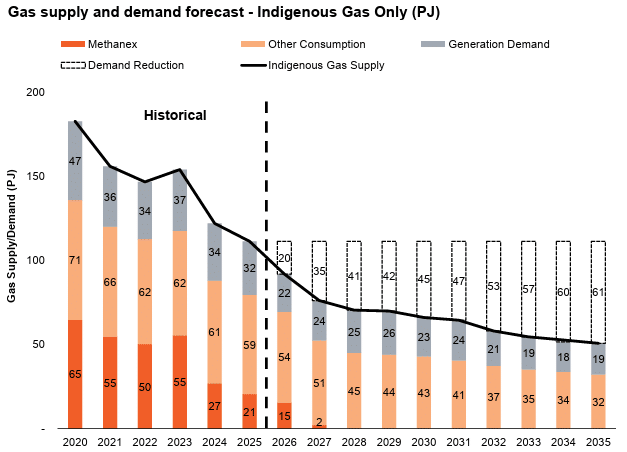
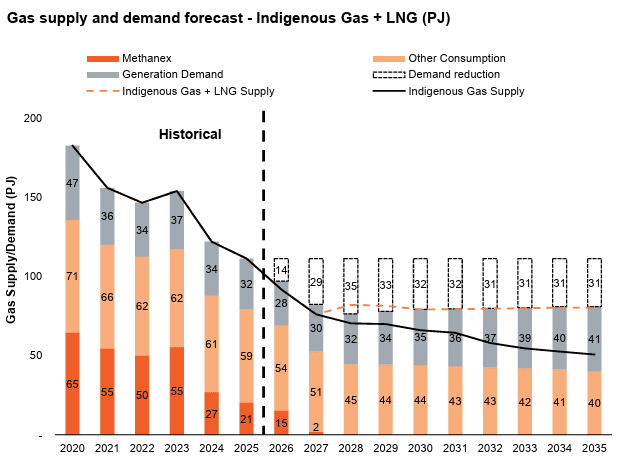
New Zealand’s gas market is entering a period of structural change. PwC’s 2026 Gas Supply and Demand Study, prepared for the Gas Industry Company, highlights a future where indigenous gas supply continues to decline, major fields reach end‑of‑life, and commercial and industrial (C&I) customers face increasing uncertainty.
For businesses that rely on gas for process heat, manufacturing, food production, or backup generation, the implications are significant — and planning ahead is essential.
The State of the Gas Market: Key Findings from the PwC Study
1. Domestic gas supply is declining faster than expected
New Zealand’s indigenous gas production has fallen to levels not seen in decades. Major fields are maturing, and by 2035 domestic supply could halve again. This creates structural scarcity and increases exposure to supply shocks.
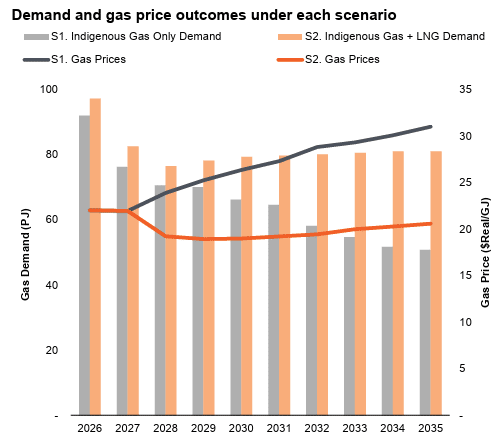
2. Without LNG, the market becomes extremely tight
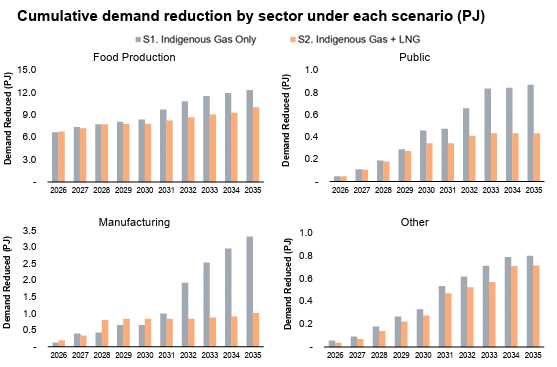
Gas demand must fall sharply by 2035
Industrial users face potential forced fuel switching
Electricity prices become more volatile, especially in dry years
3. LNG imports from 2028 improve stability — but don’t eliminate risk
If LNG is introduced:
Prices become more stable
Electricity security improves
Industrial operations remain more viable
However, LNG still exposes New Zealand to global commodity markets, and the study makes it clear that significant electrification or alternative fuels will still be required from the late 2020s onward.
4. The 2030s will be a crunch period
Even with LNG, domestic supply continues to decline. Any delays in LNG infrastructure or new supply sources increase risk for C&I customers.
What This Means for Commercial & Industrial Energy Users
1. Expect higher and more volatile gas prices
Tight supply and declining production create upward pressure on pricing. Dry years will amplify volatility.
2. Contract availability will shrink
Retailers may:
Shorten pricing validity windows
Reduce willingness to quote
Prioritise large or strategic customers
Require longer‑term commitments
3. Forced switching is a real possibility
Industries relying on gas for process heat may face:
Mandatory curtailment
Loss of supply if fields decline faster than forecast
Higher costs if switching is unplanned
4. Decarbonisation pressure will intensify
Even with LNG, the study is clear: New Zealand must electrify or adopt alternative fuels at scale.
Key Recommendations for Total Utilities Clients
1. Secure long‑term gas contracts where possible
For businesses that must remain on gas in the medium term:
Lock in multi‑year supply agreements
Prioritise retailers with strong upstream positions
Consider hedging strategies
Avoid exposure to short‑term or spot‑driven pricing
2. Begin evaluating alternative fuels now
Depending on your process heat requirements, viable options include:
Electric boilers or industrial heat pumps
Biomass or wood pellets
Renewable LPG or bio‑LPG
Hydrogen‑ready equipment
Thermal storage solutions
3. Stress‑test your energy strategy
Consider:
What happens if gas supply is curtailed for 30–90 days
The impact of a dry‑year price spike
The risk of a retailer declining to renew your contract
The cost difference between proactive vs reactive fuel switching
4. Integrate energy security into long‑term planning
Businesses should incorporate:
Scenario modelling
Capex planning for alternative fuels
Electrification roadmaps
Carbon reduction pathways
Contingency planning for supply interruptions
How Total Utilities Can Help
1. Gas procurement and long‑term contract negotiation
We work with all major gas supplies, helping you secure competitive, reliable supply in a tightening market. Over the last few months we have been securing contracts of up to 5 years and while this does not guarantee gas supply, it does provide long term gas pricing security.
2. Ongoing market intelligence
We continuously monitor:
Gas supply conditions
Retailer behaviour
LNG developments
Electricity market dynamics
Policy and regulatory changes
3. Decarbonisation and feasibility studies
Our technical partners can assist your business build practical, staged plans that balance cost, operational requirements, carbon reduction, technology readiness, and risk management. From engineering assessments to procurement and implementation, they guide you through the entire transition process.
Final Thoughts
The PwC study is a clear signal: New Zealand’s gas market is tightening, and C&I customers must prepare for a future where gas is more expensive, less available, and increasingly uncertain.
Whether your business intends to stay on gas for the medium term or transition away from it, the decisions you make in the next 12–24 months will shape your resilience and competitiveness through the 2030s.
Total Utilities is here to help you navigate that journey with clarity, confidence, and data‑driven strategy.