Zero waste… zero time to lose!

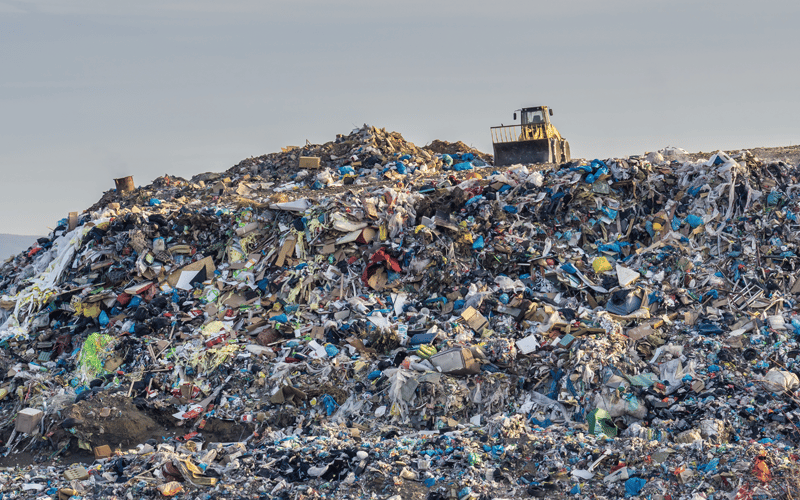
It’s no secret that the world is facing a waste crisis. How to reduce it, pay for it, its impact on our public and planet’s health, and where it ends up are just some of the concerns we’re grappling with.
The good news is, Total Utilities can help you identify, monitor, and reduce your waste. Here’s why engaging us as your waste management consultant is so important.
Our growing waste problem is not only costly to the environment but expensive for businesses. New Zealand faces rising transport and disposal costs, changes to national policy and levies, and uncertainty around where to export our recycling when we don’t have the facilities to handle it here.
The Emissions Trading Scheme (ETS), our government’s primary climate change response, plays a leading role in how we collectively manage waste and reach our internationally established targets. Our 2030 target, which is New Zealand’s first Nationally Determined Contribution (NDC) under the Paris Agreement, is as follows:
Waste is a specified activity under the ETS, so those in the waste sector must participate in the scheme. This means disposal facility operators must report their emissions to the government. They need to pay for permits to emit carbon and can offset their emissions. Land disposal facilities have options: they can either decarbonise their activities, face mounting costs, or offset their emissions by supporting climate action projects like forestry and conservation.
The most cost-effective and sustainable path for landfill facilities is to find ways to reduce their emissions. The government incentivises these facilities to find and deliver innovation and efficiencies by becoming eligible to apply for a Unique Emissions Factor. You can read about this here.
Growing pressure to address climate change, the uncertainty surrounding recycling commodity returns and stricter separation and hygiene standards are all factors behind the government’s decision to raise waste levies.
The levy increase will be phased in over four years, the first of which happened in July 2021. Levies will increase to a maximum of $60 per tonne by 2024.
These increases are designed to encourage more recycling and to divert waste from landfills. The costs apply regardless of which waste supplier you choose.
Based on the average industry wage, the cost increase would equate to an additional $22 per 4.5m³ front-end load pick up. We’re investigating with each supplier how this cost will be passed on.
In a 2018 Stuff article, Green Party MP, Eugenie Sage, who was the Associate Environment Minister at the time said, “The co-mingling of waste like glass, paper and plastic was what led China to stop accepting it.”
One solution is to improve the quality of our waste by changing our behaviour – getting better at sorting and separating our waste at the source.
Now that the Chinese market doesn’t accept specific categories of recyclables, costs have grown significantly.
The Chinese government also signalled to reduce its annual cardboard recycling quota by six million tonnes (10% of global demand). This means the cardboard price will drop further – it’s a market characterised by extreme pricing uncertainty.
China’s ban had a massive ripple effect on where millions of tonnes of waste ended up. Indonesia bore the substantial brunt of this.
In late 2019, the Indonesian government was looking to pass urgent legislation which would allow them to legally return spoiled recycling back to the port of origin, not the last port of call.
Indonesia has now closed its market to recycling and has indicated it would only re-open if spoiled waste could be sent back to the country of origin.
Stricter global spoilage standards will affect the ongoing rates for recycling in New Zealand. The market has not priced all these factors in yet. Under the current uncertain climate, suppliers are unable to fix pricing for recycling.
By working closely with our specialist waste consulting partners, suppliers, and customers, you can achieve reduced waste charges and levies, improved monitoring and reporting of your waste systems, and ultimately send less waste to landfill. This is a win for your bottom line and the environment.
Navigating the waste environment alone is complicated – it takes a deep understanding of the political, environmental, and global trends and policies. We expect that what happens to our waste will continue to be complex for many years to come.
Total Utilities has a finger on the pulse of policy, pricing and procurement. We can effectively interpret the changes and identify smart ways for you to contribute towards a more efficient, greener, cleaner planet.
That’s good for everyone.

40% reduction in exposure to waste levies
Contract savings of $420k between 2021 and 2024
Ongoing recycling savings of $288k + each following year
Total Utilities provides a coordinated waste procurement, supplier management, monitoring and reporting service to many well-known New Zealand and Australasian brands.
We make sense of the options available, and know when and how to manage contracts,supplier engagement and multiple waste streams.
One of our big retail clients generates around 7,000 tonnes of waste each year. Until recently, most of this headed straight to landfill with minimal recycling or reuse. If they continued down this path the additional government levies and disposal tariffs could have added around $400,000 each year to their waste bill. Not to mention the damage to the environment and their brand’s reputation.
By engaging Total Utilities, the above customer:
We recently conducted a waste mitigation project in partnership with a well-known Australian firm, their supplier, and a specialist recycler. This partnership not only produced significant costs savings but allowed all parties to measure and monitor their results.
By engaging Total Utilities, the above customer:
Our client was about to negotiate a new contract with an existing waste supplier. Head Office in the meantime was facing increasing pressure to reduce costs and report on robust decarbonisation, recycling and waste diversion targets.
Total Utilities worked with the supplier to agree a win/win contract that included agreed targets and reporting. The supplier met these targets in the first half of the contract term, earning them the right to extend their contract for a much longer period, subject to continued performance.
As a result of this improved contact, the customer:
By working closely with our specialist waste consulting partners, suppliers and customers, Total Utilities improves the performance and efficiency of waste management, whilst negotiating the best possible contract terms. For our customers, this means reductions in their waste charges, levies and carbon footprint, improved monitoring and reporting of their waste systems, and less waste sent to landfill. We’re proud that as a result of these engagements businesses can reduce and reuse. These sustainable practices can be maintained long into the future for the benefit of current and future generations.
Keen for your business to enjoy the similar outcomes? Email us at [email protected]
Business and media enquiries can be made to Total Utilities.
Intelligence without ambition is a bird without wings.
Drawing is the honesty of the art.
Salvador Dali
Today Total Utilities announces its new branding. Over the last 18 years we have worked hard to assist companies in controlling consumption and cost. It’s an exciting day for us and we are proud to share this with you.
From today you’ll see a change in the way we look, including our new ribbon logo. The spherical shape represents the whole as we take a 360 degree approach to understanding our clients and their utility requirements, whether it be Energy, Waste and ICT or Insights, Strategy and Solutions.


What doesn’t change is our desire to create a sustainable future for New Zealand businesses and how they manage their utilities by continuing to deliver ongoing value for our clients.
We continue to work hard to provide new services to assist our clients such as Energy Monitoring and Targeting through wireless non-intrusive energy senors, Cloud Computing Analytics for consumption of computer services and qualitative and quantitative reporting aligned to overall financial strategy.
Total Utiltities About Us Presentation
We remain committed to delivering a personalised service and assisting our clients navigate a rapidly evolving commercial market place by underpinning strategic thinking.
I would like to thank our existing clients for your continued loyalty and confidence in our company. To prospective clients, I hope that you will partner with us to discover real world solutions for sustainable utility consumption and cost optimisation.

Businesses need to get the best possible pricing and contract terms for utilities such as water, power and rubbish collection.
But once costs are minimised, improved utilisation becomes critical to extracting greater value. A formal, independent audit process is the best way of identifying quick wins.
In the past two years the waste services marketplace has experienced aggressive price-cutting by major suppliers. Now they are differentiating themselves with srvice offerings, and their customers need to understand how.
In recent months two vertically integrated suppliers have signalled their intention to emphasise value-added recycling and waste minimisation processes over price-cutting, going forward. Other suppliers of waste services that don’t possess their own landfills are using waste audit services as a point of difference, to avoid getting dragged into a price-cutting battle they will struggle to win.
Business customers will save more money by sending less waste to the rubbish dump (landfill) than they will from a reduction in the price of waste services.
From a supplier’s standpoint, waste audits are costly, requiring staff time and data analysis, with capital outlays often the consequence of the resulting recommendations. Waste audits are also self-defeating for those in the business of collecting and burying rubbish.
As we have been working with businesses to reduce their waste quantities and bin movements, as well as negotiate new commercial contracts on their behalf, we have observed the following potential pitfalls:
Staff training: New waste-handling process may require either specialised staff training or socialising of new ideas. This entails additional cost, and the purported benefits may be predicated on unrealistic assumptions.
Staff buy-in: Change needs to be adopted from the top down, however, if staff aren’t on board with a new process, you could be charged for specialist one-off disposal of spoiled recyclables should waste not be accurately sorted. It is thus important to ascertain the time pressures on your staff before a new initiative is accepted.
 Hospitality customers are a happy hunting ground for waste diversion suggestions given that their raw materials often come in recyclable packaging, and food waste streams result. However, this industry is fundamentally deadline-focussed, and staff are less likely to worry about what goes in a particular bin when there are orders backing up. A suggestion to save money on waste may thus end up costing you more in staff time.
Spread the message and keep it current: Ensure you spread the waste diversion message beyond a small number of staff. This has cropped up in the education sector where a particular year/age group might push hard for an improved process, but the next year is more apathetic. A few years later a similar set of failed initiatives will be suggested by an enthusiastic set of newcomers, unaware of what was previously attempted.
Challenge current processes and the underpinning assumptions with an audit review process. The terms and conditions of certain supply agreements prohibit your engaging competing waste service suppliers for such reviews. This serves the interests of your incumbent supplier, whilst limiting the breadth of ideas and potential technologies available.
The Commerce Commission moved in 2015 to limit unfair contract terms, which cause an imbalance in parties’ rights in consumer contracts. Although the intention is to focus on the non-commercial sector, energy retailers have begun rolling out more end-user friendly terms to business customers.
It is our hope that the relevant waste industry participants will adopt a similar position to allow for a greater spread of waste minimisation ideas.
Other than the obvious desire to limit landfill refuse, to extend the life of these expensive assets and minimise resource wastage, there are currently obvious financial pay offs in diverting waste. These are likely to grow in future, either with a change of Government, or with a change in Government focus.
A waste levy of $10 per tonne is already in place to help reduce the amount of waste New Zealanders generate, but the levy is set at a level 10 times below that of some of New Zealand’s regular trading partners. In addition, the Emissions Trading Scheme covers methane emitted from landfills, but only for every second tonne at present.
Energy-savings initiatives by business are hampered by relatively low energy-pricing, and the same sort of thinking will undoubtedly apply with regard to waste services. However, given the current level of these charges vis-à-vis our international trading partners, we recommend business remediates as much as possible now rather than face higher costs in the future.
With the components of your waste services charges unlikely to fall any lower, diverting waste from landfill such as with increased recycling, is the best way to unlock additional savings and insulate your business from potential cost blowouts in future.
Jonathan Gardiner is a Director of Total Utilities.

The recent Commerce Commission ‘ruling’ on Unfair Contract Terms for utilities is great news for businesses.
Total Utilities has been negotiating utility agreements since 1999 and a recurring bugbear for us in the past 16 years has been the use of automatic contract roll-over and right of renewal/price-matching provisions by some suppliers to constrain effective competition.
Put bluntly, these clauses have been used as a ‘hospital pass’ by the suppliers in question to avoid a level competitor playing field – especially in the waste services/recyclables and natural gas markets.
As of 16 March 2015, the applicable new agreements must not include such clauses (i.e. Unfair Contract Terms).
It must be emphasised however that these contract clauses are still allowed if existing supply/service agreements are renewed for a further term.
The implications of this are very clear, businesses should negotiate brand new agreements covering the utilities etc in question – don’t just roll your existing agreement on the basis of unchanged contract terms and conditions.
Reference should be made to the Commerce Commission website for full details of their ruling. A PDF of the ruling can be downloaded here.