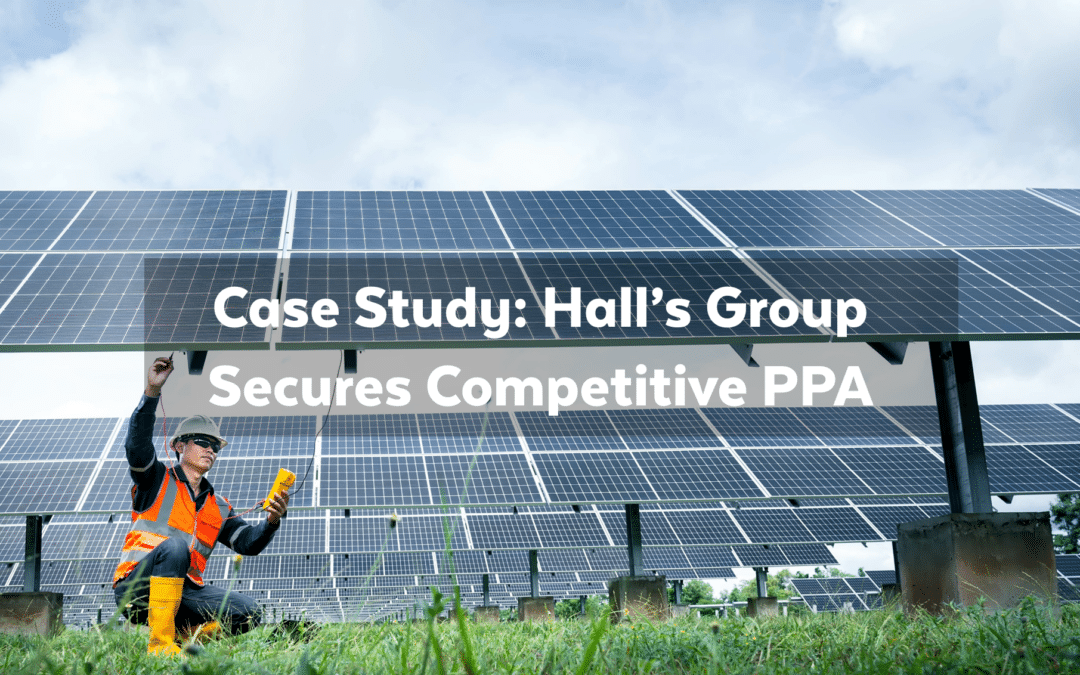
Since 2008, Total Utilities has been a trusted energy and procurement partner to Hall’s Group, one of New Zealand’s largest cold chain logistics providers. In 2025, this longstanding partnership reached a major milestone when Total Utilities supported Hall’s adoption of Lodestone Energy’s virtual solar model—an innovative renewable electricity solution designed to reduce emissions, stabilise long-term energy costs, and future-proof the company’s nationwide operations.
Client Background
Hall’s Group, owned by the Talley’s Group, operates a significant refrigerated transport and cold storage network across New Zealand. Its footprint includes:
Eight cold storage facilities
Nine logistics depots across both islands
A fleet of more than 640 specialised vehicles
Over 700 employees
With major hubs in Tauranga, Napier, Wellington, Christchurch, and Invercargill, Hall’s plays a critical role in maintaining the country’s food supply chain. Its leadership team has a clear long-term strategy: build a more sustainable, cost-efficient logistics network that aligns with customer expectations for low-carbon supply chains.
The Challenge
Hall’s energy demand is both high and mission critical, driven by continuous refrigeration loads across its facilities and vehicle network. The business sought a solution that could:
Reduce exposure to volatile electricity prices
Support its sustainability and emissions reduction commitments
Provide a robust financial pathway for long-term energy planning
Avoid operational disruption
Given the scale of Hall’s network and its continuous power needs, any solution needed to be reliable, future-oriented, and backed by strong analytical validation.
Total Utilities’ Approach
Total Utilities worked closely with Hall’s executive leadership to design and test a comprehensive financial and strategic business case for adopting Lodestone Energy’s virtual solar model.
Our work included:
1. Long-Term Pricing and Risk Analysis
We modelled long-term electricity cost trajectories and compared renewable supply scenarios against traditional procurement models. This analysis highlighted the pricing stability and hedging benefits of Lodestone’s solar-backed supply.
2. Security and Reliability Assessment
We assessed the operational implications of integrating certified renewable electricity into Hall’s distributed cold chain network, ensuring no compromise to 24/7 refrigeration requirements.
3. Alignment with Sustainability Strategy
We evaluated the emissions reduction benefits in the context of Hall’s wider decarbonisation roadmap and customer-driven expectations for climate-aligned logistics partners.
4. Executive Confidence Building
By presenting evidence-based insights, scenario modelling, and risk mitigation pathways, Total Utilities enabled Hall’s leadership to confidently proceed with a progressive, sector-leading energy purchasing strategy.
The Solution: Lodestone’s Virtual Solar Model
Hall’s entered into a long-term renewable electricity supply agreement with Lodestone Energy, supported by Total Utilities’ commercial and strategic advisory. Lodestone will supply Hall’s through its expanding portfolio of utility-scale solar assets, including:
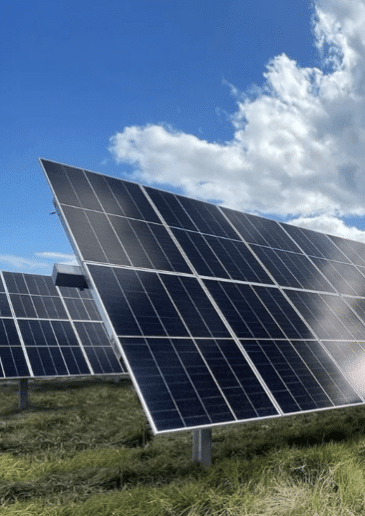
The newly commissioned Whitianga solar farm
The Clandeboye development under construction
An additional soon-to-be-announced solar site
The agreement enables Hall’s to offset the electricity used across its national operations with fully certified renewable energy, ensuring long-term cost stability and meaningful emissions reduction.
Impact
For Hall’s Group
Stabilised long-term energy costs through price-certain renewable supply
Strengthened reputation as a forward-thinking logistics provider
Future-aligned energy strategy supporting nationwide growth
Chief Executive Gareth McFarlane described the agreement as a natural evolution of Hall’s long-term strategy to build a more sustainable and cost-efficient network—one that “genuinely makes a difference” for both the company and its customers.
For New Zealand’s Renewable Energy Landscape
Hall’s joins a group of major organisations adopting Lodestone’s model, alongside companies such as The Warehouse Group and Ingham’s. This contributes to a pipeline of more than 1,000 GWh of annual solar generation, accelerating access to affordable, low-carbon electricity across the country.
A Strengthened Partnership
For over 15 years, Total Utilities has supported Hall’s with strategic energy procurement and advisory services. This latest project underscores the value of a collaborative, long-term partnership built on trust, shared vision, and a commitment to innovation.
By guiding Hall’s through a rigorous assessment and implementation process, Total Utilities helped the organisation confidently transition to a renewable energy solution that supports both commercial outcomes and New Zealand’s wider low-emissions future.
Solar Smarts: How Kiwi Businesses Are Winning with Sunshine
Overview
Total Utilities’ Solar Feasibility Review and Supplier Engagement initiative is designed to help businesses evaluate the technical, financial, and environmental benefits of solar energy. By leveraging proposals from trusted SEANZ-approved providers, we deliver clear, data-driven insights and supplier options tailored to your energy usage profile and sustainability goals.
Our Process
Comprehensive Feasibility Review
Technical Assessment: Analyse your site’s solar potential, roof structure, and energy consumption patterns.
Financial Modelling: Calculate projected savings, ROI, and payback periods.
Environmental Impact: Estimate carbon emission reductions and ESG alignment.
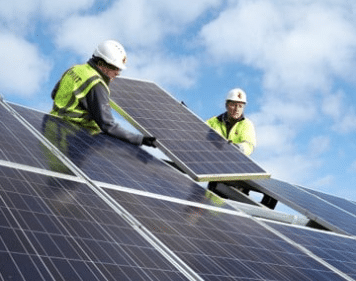
Total Utilities has assessed proposals covering over 4MW of solar capacity, generating $1 million in annual energy cost savings with an average ROI of under 6.5 years.
Recent Projects
Hamilton High School
System: 167kW rooftop
Savings: $50k/year
CO₂ Reduction: 25 tonnes/year
ROI: 6.3 years
Financing: SmartEase – cashflow positive from day one
A key advantage Total Utilities brings to solar feasibility projects is our deep knowledge of energy procurement and market dynamics. By analysing current wholesale and retail electricity market conditions, we forecast future energy prices and establish a robust cost baseline. This ensures solar designs are evaluated against realistic, forward-looking energy cost scenarios rather than static or outdated assumptions.
Why This Matters:
Consistent Comparison: Solar proposals are assessed on the same financial basis, eliminating solar company bias or straight line price escalations that are not realistic. Risk Mitigation: Forecasting helps businesses understand potential exposure to rising power costs and quantify the value of solar as a hedge. Particularly useful if your business will soon end an energy supply contract. Data-Driven Decisions: Our procurement insights provide confidence that projected savings and ROI reflect actual market trends.
By integrating these forecasts into our financial modelling, we deliver a comprehensive view of both short-term and long-term benefits, ensuring your solar investment aligns with your business strategy and energy risk profile.
Total Utilities, as your trusted advisor, can source a tailored solar design that aligns with your energy profile and sustainability objectives. Contact us today to start your Solar Feasibility Review and unlock long-term savings and environmental benefits.
Inghams Enterprises is one of New Zealand’s leading poultry producers, operating multiple facilities nationwide. With a strong focus on cost efficiency and sustainability, Inghams aimed to reduce energy costs and improve environmental performance of its energy contracts.
Challenge
Inghams faced rising electricity costs and needed to explore long-term procurement options. The challenge was to identify a solution that balanced:
Cost certainty
Sustainability outcomes
Operational feasibility
Options considered included traditional electricity supply, on-site solar, and market-based renewable energy solutions.
Our Approach
Detailed financial modelling and market analysis of current and future electricity pricing
Evaluation of multiple procurement pathways: traditional supply, behind-the-meter solar, and Power Purchase Agreements (PPAs)
Feasibility assessment of a solar farm at the Waitoa site
Facilitation of direct engagement with Lodestone Energy to structure a tailored long-term supply agreement
Has your organisation invested in commercial solar panels, or are you considering deploying solar power? If so, you might be looking for ways to maximise your return on investment (ROI).
In today’s challenging business environment, adapting your energy strategy is crucial. Objective tracking of your assets’ cost and performance is becoming increasingly important. Without this data, you could face additional pressure on your bottom line, complicating your budget amid rising costs.
The Power of Panoramic Power
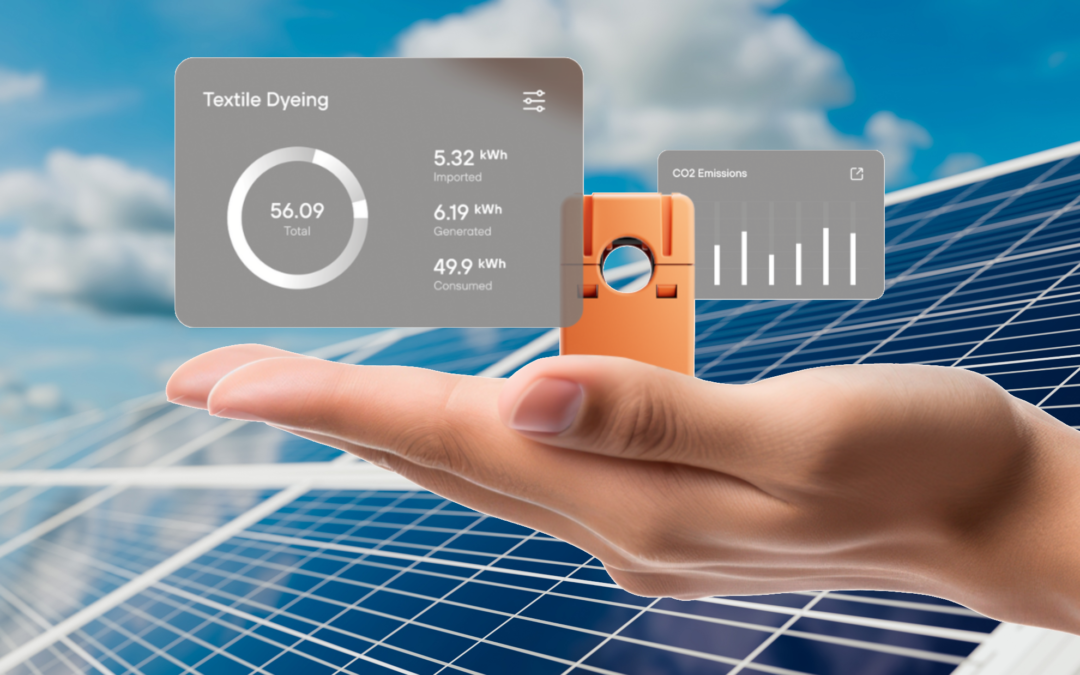
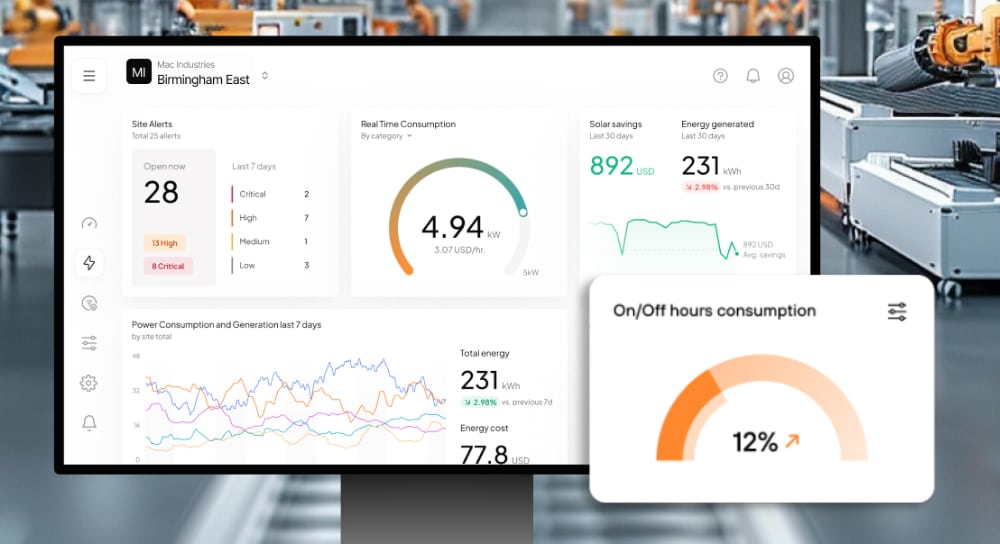
Panoramic Power’s end-to-end energy management and intelligence platform can help you clarify your energy picture. The benefits of real-time data start from the very beginning of your solar system’s lifetime. Panoramic Power can help you track your organisation’s electricity demand and energy costs. With real-time alerts and reporting, you’ll be able to view energy usage for your entire site. This can help you identify opportunities to cut wastage and reduce your total energy demand.
Lowering Usage and Reducing Costs
Lowering your energy usage means drawing less energy from the grid. This allows you to meet more of your total demand via your solar system, providing more stable prices and accurate forecasts. If you invested via capital sale, this could even help reduce your solar system’s payback period.
If you haven’t invested in solar power yet, tracking your energy usage can still benefit your business. Reduced usage means you’ll need a smaller system, with a 25% reduction resulting in a roughly 25% smaller solar system. This can lower your upfront costs and free up your budget for other investments.
Achieving Energy Efficiency
Energy efficiency is a priority for many organisations. For some, energy monitoring can deliver quick wins and effective short-term savings. However, progress can stall without a more granular view of energy usage and cost.
With device-level insights, you can track exactly how much energy you’re using and where. Panoramic Power provides a detailed view of where and when you could reduce your energy usage. By uncovering opportunities to cut back on wastage, you can ensure that you’re only using the energy you really need.
Transforming Your Energy Strategy
Pairing energy monitoring with commercial solar power can transform your energy strategy, offering dual benefits. Bringing your energy generation onsite reduces your reliance on grid supply, shielding you from volatile electricity prices. By tracking your energy demand, you’ll know you’re paying the right price for the right amount of electricity.
In conclusion, data-driven energy monitoring and insights can help you maximise your ROI in commercial solar power. By collecting, analysing, and acting on data-driven insights, you can bridge the gap between commitments and implementation, achieve your energy goals, and build a more sustainable future.
How Total Utilities Can Help
Our expert team can help you unlock significant energy savings with a short-term return on investment (ROI). Typically, we can identify up to 25% savings with an ROI of less than 2 years.
We offer the easiest-to-install, and fastest for ROI energy management solution, that scales effortlessly from a few devices to full-site or multi-site operations. Experience actionable insights and real-time analytics that drive efficiency and sustainability. Our solutions work for everyone, helping your organisation kickstart cultural transformation towards a sustainable future.
Total Utilities partners with Kristin School to provide real-time monitoring of solar panel performance with our world-class energy monitoring solution. Read their story here.
Imagine powering your organisation with clean, renewable energy while keeping costs under control. Well, a Solar Power Purchase Agreement (PPA) could help you achieve that.
A Solar PPA is a long-term contract allowing your business to procure electricity directly from a renewable power generator. This can consist of solar energy generated from on-site panels or offsite grid connected solar farms. This allows solar to be purchased as a commodity at a relatively low generation cost compared to forward energy market prices.
There are many different types of Solar PPAs–which I’ll discuss a little later in this article–so you can choose which type works best for your organisation.
Types of Solar PPAs
There are many different types of Solar PPAs, so you can choose which type works best for your organisation.
On-site PPAs
Commercial Solar PPA: This contract typically lasts 15 to 20 years and requires no upfront investment from you. The solar company takes care of everything—from designing and financing to building, operating, and maintaining the solar system at your site. You simply pay a fixed rate per kWh for the electricity generated, which is usually lower than the rates from the grid. This arrangement helps you reduce your reliance on carbon-intensive energy sources, maximise energy savings, and gain better control over your costs.
Private Wire PPA: Similar to the Commercial Solar PPA, this type utilises ground-mounted solar panels installed on nearby land. Electricity is transmitted directly to your site through a “private wire.” Like the Commercial PPA, it typically lasts 15 to 20 years and allows you to decrease your reliance on grid power while cutting costs and carbon emissions.
Off-site PPAs
Offsite PPAs are sourced from grid-scale generation assets, commonly categorised as “sleeved” or “virtual” PPAs. They offer several advantages over onsite PPAs:
The solar system can be built in optimal locations, ensuring higher efficiency.
Energy purchase amounts aren’t limited by your site’s capacity.
Contracts can be flexible, adapting to multiple sites or relocating if necessary.
Sleeved PPAs: Also known as corporate PPAs, these agreements involve you, an energy retailer, and an offsite renewable generation source. Typically, they are take-or-pay contracts, where you commit to purchasing a fixed volume of energy at a predetermined price. The retailer takes delivery of the renewable energy and incorporates it into your supply contract, often allowing up to 70% of your demand to be met by renewable sources. These contracts can range from 10 to 20 years, with shorter terms usually carrying a premium.
Virtual PPAs: Virtual PPAs, or synthetic PPAs, are structured as contracts-for-difference. They include a strike price for the generated electricity; if market prices fall below this price, you pay the generator the difference, and vice versa. This structure offers flexibility in the amount and location of energy supplied and can support multi-site models.
The New Zealand Energy Market
In New Zealand, the energy market is largely shaped by a handful of key players, with Contact, Genesis, Mercury, and Meridian accounting for around 90% of the electricity supply. This has historically limited options for large businesses seeking to secure energy directly from generators, as most businesses are seen as too small for generators to take notice. As a result, they have to deal with retailers where the cost of generation is defined by the market.
However, a wave of independent renewable energy companies is shaking things up. Collaborations like the recent partnerships between Ryman Healthcare, Mercury, and Solar Bay, or The Warehouse Group and Lodestone Energy, or Inghams and Lodestone Energy, are paving the way for organisations like yours to lock in long-term contracts at competitive rates.
How Total Utilities Can Help
Total Utilities offers PPA consultation services as part of our broader energy procurement solutions. As an independent advisor, we assess a wide range of options without bias, ensuring that we recommend the most suitable PPA strategy for your organisation.
To learn more about investing in an onsite or offsite Solar PPA, speak to our experts today.
New Zealand’s first grid-scale solar generation plant was recently opened in Kaitaia by Lodestone Energy, and Total Utilities was delighted to be invited to the opening for an exclusive first look.
Lodestone Energy, a leading solar company in New Zealand, has launched the country’s first grid scale solar farm, Kohirā, in Kaitaia. They recently celebrated this milestone at the grand opening, and announced having raised a further $55 million for solar farm expansion.
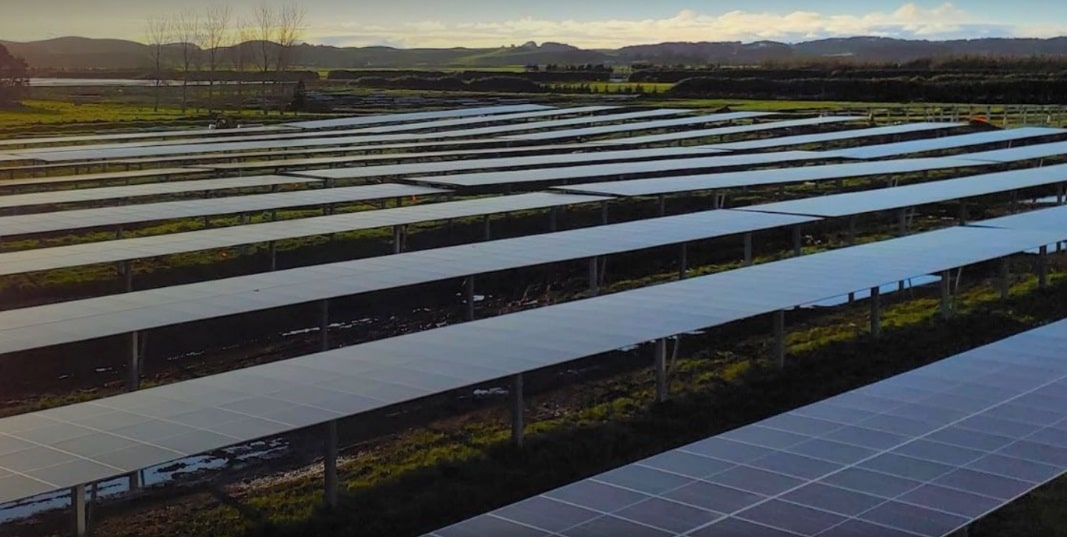
The Kaitaia facility has more than 61,000 solar panels installed, and the farm will generate up to 56 gigawatt hours of electricity annually. At peak output, this can supply all of the Kaitaia region’s electricity requirements.
Pivotal Point in Energy Generation
Gary Holden, Managing Director of Lodestone Energy, said the occasion marked a pivotal point in New Zealand’s electricity market, with the company delivering the first grid-scale solar generation plant.
“As New Zealand’s largest solar installation to date and the first solar farm in New Zealand to bid into the electricity market, this is a crucial step forward in the future of energy generation.
“Many organisations were involved in delivering this project and learnings from Kaitaia are being used in the construction of our other sites, with Edgecumbe close to starting generation and Waiotahe construction on target to be generating by the end of the year.”
The site’s official name Kohirā was gifted by Te Rarawa. Kohirā translates to suncatcher in te reo Māori and reflects how Lodestone harnesses the energy of the sun to generate electricity.
The partnership with local iwi aligns with Lodestone’s commitment to work with tangata whenua to deliver solar projects that empower both the regions in which they operate.
Chris Hargreaves reflects on Lodestone’s solar achievement
Total Utilities’ Director, Chris Hargeaves, says he was honoured to be invited along to the official launch of Kohirā. “The incredible amount of work that went into this project was evident on the day.
“Four years of extremely hard work became a shining light in the Kaitaia region and a first for New Zealand. Our country needs dreamers, and they need doers, and Gary Holden along with the Lodestone team are both.”
Chris explained that Lodestone’s Chief Financial Officer, Chris Jewell, told a great story about how after they initially met with the local Iwi and were told the story of how Maui harnessed the sun, Lodestone bought copies of the book that illustrates the legend.
“When Lodestone visited their suppliers in the UK, China and Australia, they gave away copies of these books to the contacts that they met. One in particular still reads the book to his six year old son, and his son is dead set keen on coming to New Zealand so that he can meet Maui.”
Innovative Design and Sustainable Practices
Additionally, Kohirā boasts an innovative agri-voltaic design meaning the land can be used for both farming and solar energy generation simultaneously. Solar panels are installed above crops or pastures, allowing agricultural activities to continue while generating renewable energy.
This approach maximises land use efficiency and promotes sustainable agricultural practices by combining food production with renewable energy.
Attendees including Chris were lucky enough to see the design first hands – a feature that will be rolled out across other Lodestone solar farms.
The company is currently developing five solar farms in the North Island, and has confirmed plans for three more in the South Island.
To find out more information about Total Utilities’ expertise in solar, renewable energy and sustainability, get in touch for a free consultation.